
Refining
What refining establishes, stage by stage
Refining is not only a physical process. Each stage produces both a material change and a record, and it is the combination of the two that allows a counterparty to rely on what they are being offered.
Our role
Being precise about who does what
Refining and laboratory work in this trade frequently involve third-party facilities. Where that is the case, the facility's role is identified in the records rather than presented as our own work. We describe what we arrange, coordinate and document, and we distinguish it from what a refinery partner or laboratory performs.
We do not publish claims of facility ownership, accreditation, membership or capacity that have not been verified and supplied for publication. Where such information would normally appear on a page like this, it is held back until it can be evidenced.
The process
Material received through to final documentation
Material received
Material arriving for processing is taken in under a controlled procedure. Receipt is recorded with date, description, the party presenting the material and the condition in which it arrived. Nothing proceeds on an undocumented intake.
Identification
An identifier is assigned and stays with the material for the rest of the process. Every subsequent record — weight, sample, assay, output, packing — refers back to it. Without that anchor a document cannot later be matched to a physical item, which is the most common reason documentation fails to support a transaction.
Assessment
Assessment establishes what the material appears to be, how it should be handled and what processing route is likely to apply. Gross weight is recorded, with the equipment and procedure used noted alongside the figure.
Sampling
A representative sample is taken under defined conditions. This stage decides the reliability of everything downstream: an assay reports only on the sample it received, so a sample that does not represent the lot produces a result that is accurate and meaningless at the same time. Counter-samples are retained where the parties require them.
Assay
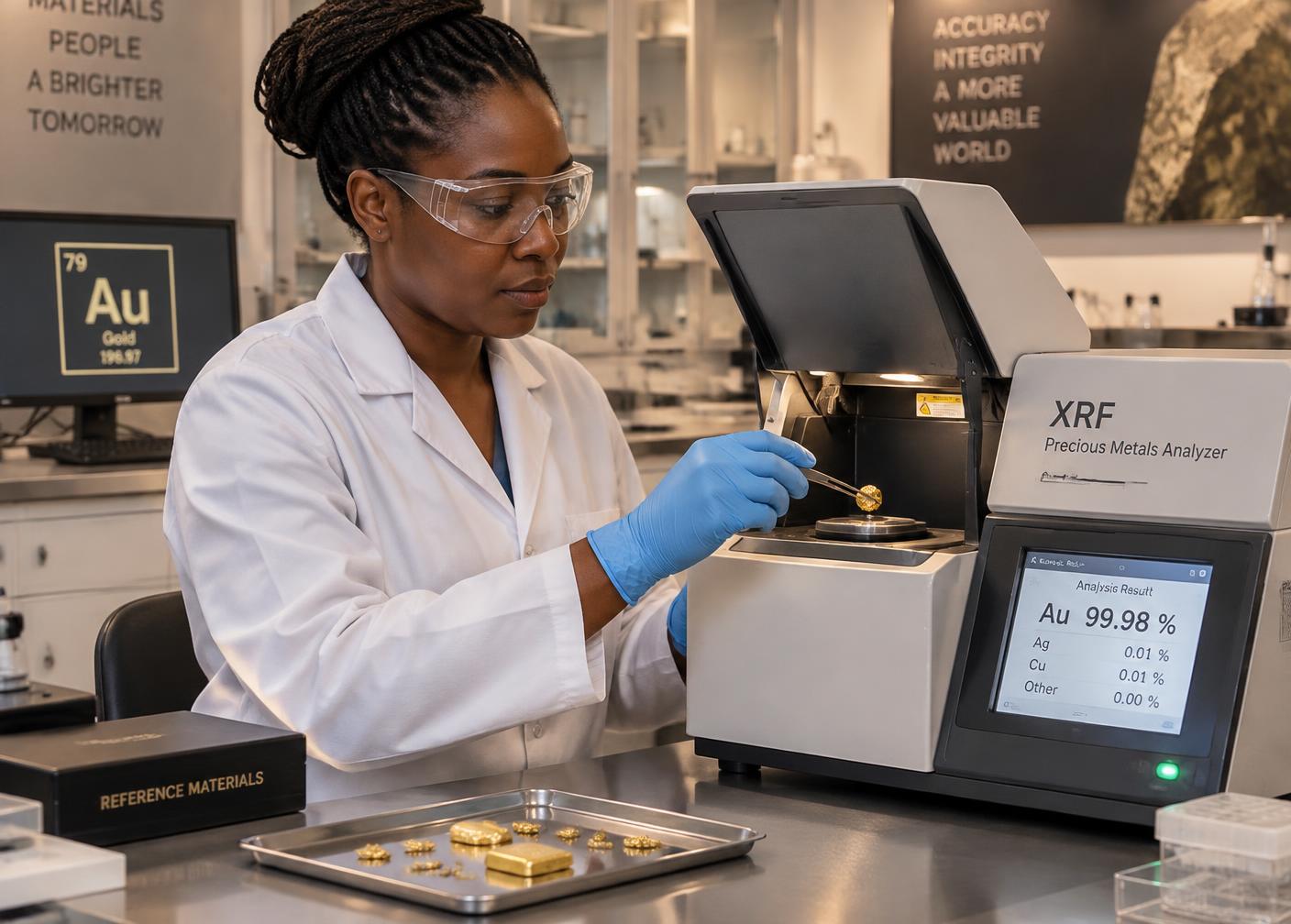
Composition is determined by an appropriate method. Fire assay is regarded as the reference technique; X-ray fluorescence is non-destructive and well suited to screening and confirmation. The method used, the date and the party performing the analysis are recorded with the result.
Refining
Refining removes impurities to bring material to a required specification. The route depends on the input composition and the specification sought. What matters commercially is the documented relationship between the input, the agreed specification and the output — not the chemistry involved.
Verification
Refined material is checked against the specification and weighed again. Where a counterparty's procedure provides for independent or witnessed verification, that arrangement is settled in advance rather than raised at this stage.
Documentation
The final stage is documentary: connecting refinery records, assay information and product documentation so the finished item, the records describing it and the material it came from form one traceable chain that can be examined later by a counterparty, a bank or an auditor.
Why sampling and assay come first
Incoming material is rarely homogeneous. Composition can vary between lots and within a single cast bar, which is why a figure quoted on arrival is a declared specification rather than a determined one.
Sampling and assay convert that declaration into a measured result attached to identified material. Processing decisions, output specification and the documentation issued at the end all depend on it, which is why the procedure is documented rather than left to established practice.
Why the records matter as much
A refined bar with no traceable record behind it is materially the same object as one with a complete chain, but it is a very different commercial proposition. Banks, auditors, customs authorities and counterparties all examine the record rather than the metal.
For that reason the documentary chain — intake, weight, sampling, assay, processing, output, packing — is treated as part of the product rather than as administration that follows it.