
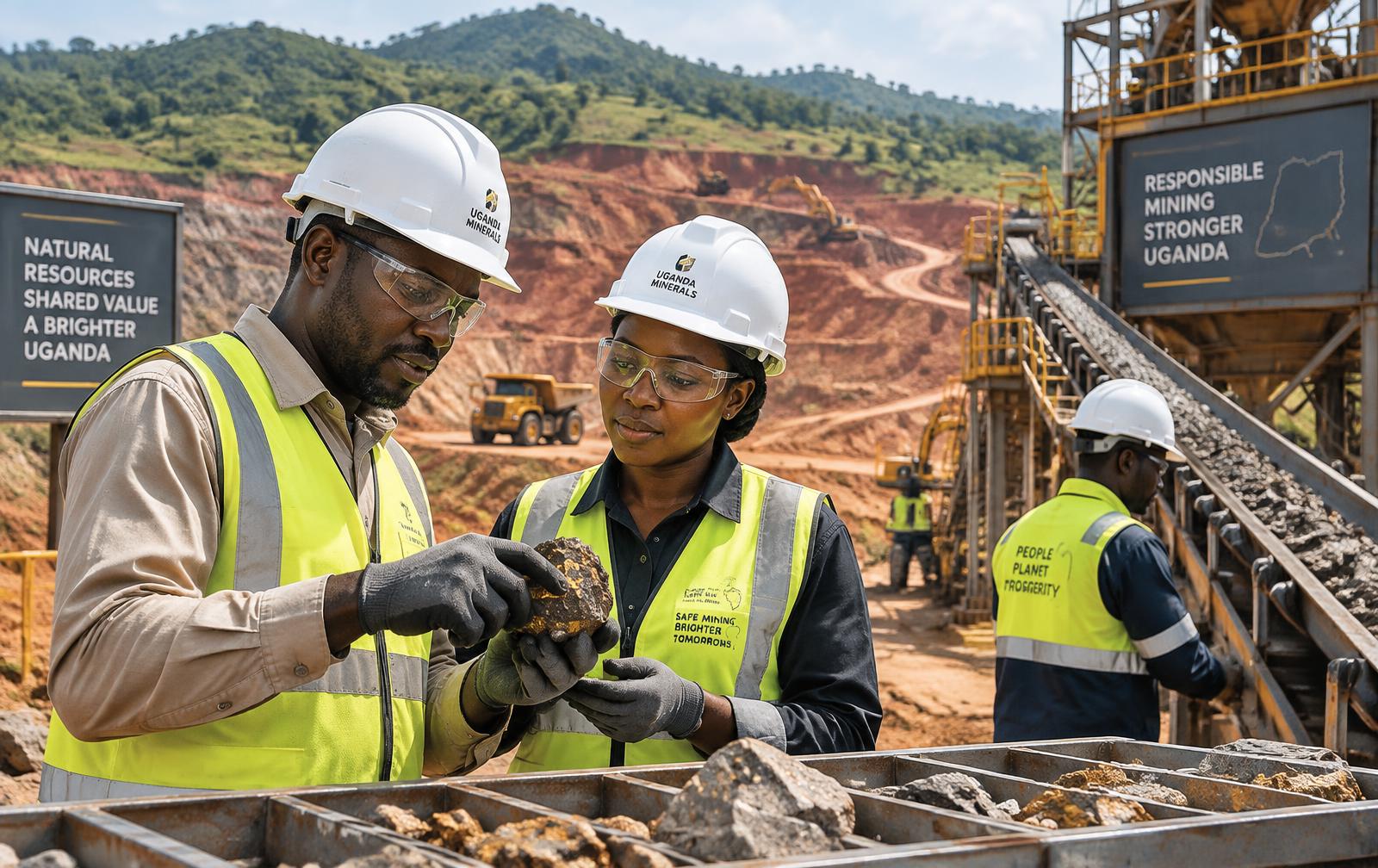
Responsible Sourcing
Responsible sourcing is a process, not a statement
Describing material as responsibly sourced asserts a conclusion. What matters is the process behind it: who the counterparty is, what is known about origin, what documentation supports that understanding, what risks were identified and what was done about them.
Know the source. Understand the counterparty.
Two questions that have to be answered together
The first question concerns the material: where it originated, how it was recovered or acquired, what records accompany it and whether the account given holds together under examination.
The second concerns the organisations involved: their legal identity, ownership and control, the licences or registrations they hold, the jurisdictions they operate in and any exposure that requires further review.
Neither answer is sufficient alone. Well-documented material presented by an organisation that cannot be identified is not a resolved position, and nor is a well-documented company presenting material with no coherent origin account. Responsible sourcing means asking both sets of questions before a transaction progresses — not after it has begun.
What a sourcing review examines
Supplier identification
Establishing who a supplier legally is: registration, authorised representatives, the individuals who ultimately own or control the organisation, and the activity they are licensed or registered to carry out. A named contact is not a counterparty; the entity behind them is.
Corporate due diligence
Reviewing the organisation itself — structure, jurisdictions of operation, ownership and any factors that call for further review before a relationship progresses.
Source and origin information
Understanding where material came from, how it was recovered or acquired, and whether the account given is internally consistent and consistent with the documentation offered.
Reviewing supporting documentation
Examining the records presented rather than accepting their existence as sufficient. Documents that cannot be matched to identified material, or that conflict with the account given, are a finding in themselves.
Supply-chain visibility
Establishing how far up the chain visibility actually extends, and stating that limit honestly rather than implying full traceability where it is not available.
Risk identification
Identifying exposure arising from geography, structure, counterparties, transaction type or the nature of the material, and recording what was identified and why.
Counterparty assessment
Forming and recording a view on the counterparty as a whole, rather than assessing each document in isolation.
Transaction review
Reviewing the specific transaction as well as the relationship. An acceptable counterparty can still present a transaction that requires further examination.
Record keeping
Retaining records of what was checked, when, by whom and on what basis, so that a transaction can be explained months later to a bank, an auditor or a regulator.
Escalation
Where information raises questions, escalating for further review rather than resolving the gap by assumption. A commercially attractive transaction is not a reason to lower the standard applied to it.
Ongoing monitoring
Continuing review proportionate to the relationship and the risk it presents, because ownership, licences, jurisdictional status and supply routes all change over time.
Responsible sourcing is continuous
Due diligence is not a checkbox
Due diligence performed once at onboarding describes a moment in time. Ownership changes, licences lapse, jurisdictions change status, supply routes shift and counterparties enter new arrangements.
Presenting due diligence as a completed formality misrepresents how supply chains actually behave. Review continues for as long as a relationship does, at a depth proportionate to the risk that relationship presents.
Requirements are not uniform
Scope depends on the transaction
What is required varies according to jurisdiction, transaction type, product, supply chain and counterparty. A structure workable on one route may be unworkable on another.
Our procedures are designed with reference to internationally recognised responsible minerals principles, including the OECD Due Diligence Guidance for Responsible Supply Chains of Minerals from Conflict-Affected and High-Risk Areas. We do not claim certification, accreditation or membership of any scheme unless it has been verified and supplied for publication.
Policy documents
The documents below are being prepared for publication. Until a version has been reviewed and approved for release, the page states that rather than presenting a placeholder file as a policy.
- Responsible Sourcing PolicyAvailable on request
- AML / KYC PolicyAvailable on request
- Supplier Code of ConductAvailable on request
- Compliance StatementAvailable on request